Why a Collection Is Only Worth What the Paperwork Can Prove
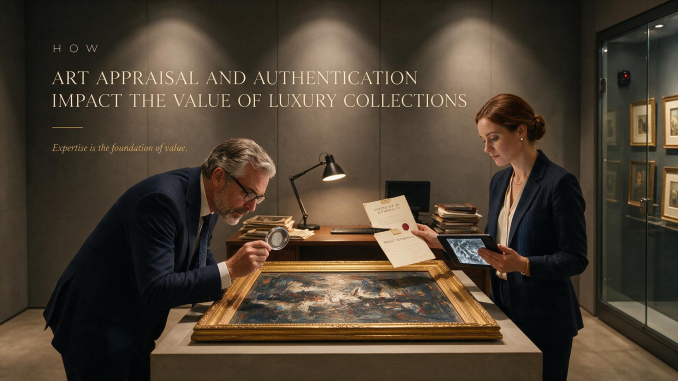
A family that has spent decades assembling a luxury art collection often assumes that the collection’s value is self-evident. The works are beautiful, they are hung in a well-designed home, and the family knows what it paid for them. That assumption can be expensive. In the art market, value is not determined by beauty or by what the owner paid. It is determined by what a qualified buyer will pay, and a qualified buyer will not pay full price for a work whose attribution is uncertain, whose provenance is incomplete, or whose condition has not been professionally documented. The appraisal and authentication process is what converts a collection from a group of objects into a recognized asset, and it is what protects the family when the time comes to insure, borrow against, donate, or sell.
The stakes are higher than many collectors realize. A single attribution question can change a work’s value by a factor of ten or more. A painting that is accepted as an autograph work by a major artist may be worth millions, while the same painting with a contested attribution may be worth a fraction of that amount. A work with a clear provenance that traces back to a well-known collection may command a premium, while a work with a gap in its history may be difficult to sell at any price. Those differences are not academic. They determine what the family can borrow against the collection, what it can deduct for charitable donations, and what its heirs will receive after estate taxes are paid.
The appraisal and authentication process is also what protects the family from the risks that are unique to the art market. The market has a long history of forgeries, looted works, and disputed titles, and even experienced collectors have been caught. A rigorous authentication process reduces the risk of buying a fake, and a thorough provenance review reduces the risk of buying a work that a third party may claim. Those risks are not hypothetical. They have destroyed collections and reputations, and they are the reason the art market relies so heavily on experts, documentation, and due diligence.
The process also has a financial cost, and the family should understand it before committing to a collection. Appraisals, authentications, scientific analysis, legal reviews, and insurance all cost money, and the costs can be significant for a large collection. But those costs are small relative to the value they protect, and they are a necessary part of owning a serious collection. Art appraisal services are not a luxury. They are a core part of collection management, and the families that invest in them tend to have fewer surprises and better outcomes.
How Art Appraisal Works and What It Actually Produces
An art appraisal is a written opinion of a work’s value, prepared by a qualified appraiser who has expertise in the relevant market. The appraiser considers a range of factors, including the work’s attribution, its condition, its provenance, its exhibition history, its literature references, and the recent auction records for comparable works. The appraiser then produces a value range, not a single number, because the art market is not precise enough to support a single figure. The appraisal also typically includes a description of the work, its medium, its dimensions, its date, and its distinguishing features, which is important for identification and insurance purposes.
The appraisal serves several purposes. The first is insurance. An insurer will require an appraisal before issuing a policy, and it will use the appraisal to determine the coverage amount and the premium. The second is tax. An appraisal is required for charitable donations of art, and it is also required for estate tax purposes. The third is financing. A lender that accepts art as collateral will require an appraisal to determine the loan amount. The fourth is estate planning. An appraisal is essential for dividing a collection among heirs, for funding a trust, or for planning a sale.
The appraisal should be prepared by an appraiser who is independent of the transaction. An appraiser who is recommended by the dealer who is selling the work may not be objective, and an appraiser who is compensated based on the value of the work may have an incentive to inflate the number. The family should work with an appraiser who is a member of a recognized professional organization, who has expertise in the relevant market, and who has no financial interest in the outcome. Fine art valuation is only useful if it is objective, and the family should insist on independence.
The appraisal should be updated periodically. The art market changes, and a value that was accurate five years ago may no longer be. The family should have its collection appraised every few years, and more frequently if there has been a significant market event or if the collection has changed. An outdated appraisal can lead to underinsurance, which means the family may not be able to recover the full value of a work if it is damaged or stolen. It can also lead to an inaccurate estate plan, which means the family may not have enough liquidity to pay the estate tax.
The Authentication Process and the Risks It Addresses
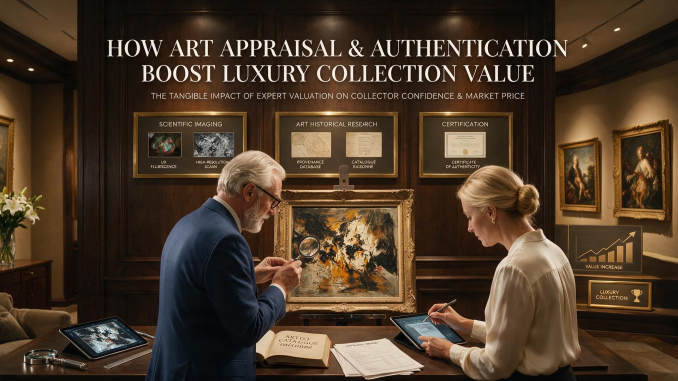
Authentication is the process of determining whether a work is what it claims to be. It involves a combination of provenance research, stylistic analysis, scientific testing, and expert opinion. The provenance research traces the work’s ownership history, looking for documentation that connects it to the artist, to a known collection, or to a recognized exhibition. The stylistic analysis compares the work to known works by the artist, looking for consistency in technique, composition, and materials. The scientific testing uses tools such as X-ray, infrared reflectography, and pigment analysis to determine the work’s age and materials. The expert opinion comes from scholars, curators, and other specialists who have deep knowledge of the artist’s work.
The authentication process is not always conclusive. Some works cannot be definitively attributed, either because the evidence is ambiguous or because the relevant experts disagree. Some artists’ foundations and estates have authentication committees, while others do not, and the absence of a committee can make authentication more difficult. The family should understand that authentication is a matter of degree, not a binary, and it should be prepared for the possibility that a work’s attribution may be questioned or revised. Art authentication is an ongoing process, not a one-time event, and the family should be prepared to revisit the question if new evidence emerges.
The authentication process addresses several risks. The first is forgery. The art market has a long history of fakes, and some of them are extremely sophisticated. The second is misattribution. A work that is attributed to a major artist may actually be by a student or a follower, and the difference in value can be enormous. The third is looting. A work that was stolen or looted during a period of conflict may be subject to restitution claims, even if the family bought it in good faith. The fourth is title disputes. A work that is subject to a claim of ownership may be difficult to sell, and the family may be forced to return it to the rightful owner.
The family should do its own due diligence in addition to relying on experts. It should check the relevant databases, including the Art Loss Register and the databases maintained by law enforcement agencies. It should review the work’s documentation, including any certificates, invoices, and correspondence. It should speak with the dealer or the seller about the work’s history, and it should be wary of any work that lacks a clear chain of ownership. The cost of due diligence is small relative to the value of the work, and the consequences of skipping it can be severe.
Condition, Conservation, and the Impact on Value
The condition of a work is one of the most important factors in its value, and it is often the factor that collectors understand least. A work that is in excellent condition is worth more than one that has been damaged, restored, or altered, and the difference can be significant. A painting that has been over-cleaned, over-restored, or relined may have lost its original surface, which can reduce its value by a substantial amount. A work on paper that has been exposed to light, moisture, or improper handling may have faded, stained, or torn, which can reduce its value even more.
The condition assessment should be conducted by a qualified conservator, who can examine the work and document its condition in a written report. The report should include photographs, a description of the work’s materials and structure, an assessment of any damage or restoration, and recommendations for treatment. The report should be updated periodically, especially before a sale or a loan, because the condition may change over time.
The conservation treatment is a separate decision, and it should be made with care. A treatment that is too aggressive can damage the work and reduce its value, while a treatment that is too conservative may leave the work vulnerable to further deterioration. The family should work with a conservator who has experience with the relevant medium and period, and it should consider the treatment’s impact on the work’s value before proceeding. In some cases, the best decision is to leave the work alone and to focus on preventive care. Art collection insurance should cover the cost of conservation and restoration, because those costs can be significant.
The condition of the work also affects its insurability. An insurer will typically require a condition report before issuing a policy, and it may exclude coverage for pre-existing damage or for damage that results from improper handling. The family should review the policy carefully and should understand what is covered and what is not. It should also consider whether the policy covers the work while it is in transit, on loan, or in storage, because those are the times when the work is most vulnerable.
Estate Planning, Charitable Donations, and the Role of Documentation
The appraisal and authentication documentation is essential for estate planning. A collection that is not properly documented may be difficult to value for estate tax purposes, which can lead to disputes with the IRS and to unexpected tax bills. A collection that is properly documented can be valued accurately, which allows the family to plan for the tax and to avoid surprises. The documentation also helps the family divide the collection among heirs, because it provides a clear record of what each work is worth.
The documentation is also essential for charitable donations. A family that donates a work to a museum can claim a deduction for its fair market value, but the deduction requires a qualified appraisal and a clear record of the work’s provenance and condition. The IRS scrutinizes art donations carefully, and a donation that is not properly documented may be disallowed. The family should work with a tax advisor who has experience with art donations, and it should ensure that the documentation is complete before the donation is made.
The documentation is also important for financing. A family that wants to borrow against its collection will need an appraisal and a clear record of the work’s title and condition. A lender that is not confident in the documentation may decline the loan or may require a higher interest rate. The family should work with a lender who understands the art market, and it should ensure that the documentation is in order before applying for the loan. Luxury art investment is not just about buying the right works. It is also about managing the documentation that supports their value.
Common Mistakes and the Discipline of Documentation
The most common mistake is failing to keep adequate records. A family that buys a work without a proper invoice, a certificate of authenticity, or a provenance record may find that it cannot prove the work’s value when it needs to. The family should keep a complete file for each work, including the purchase documentation, the appraisal, the condition report, the exhibition history, and any correspondence with the dealer or the artist. The file should be stored securely and should be updated as the work’s history evolves.
Another common mistake is relying on a single opinion. A family that relies on one appraiser or one dealer may miss important information, and it may be exposed to the risk of error or bias. The family should get multiple opinions, especially for high-value works, and it should compare them to the auction records and to the market data. The cost of a second opinion is small relative to the value of the work, and the benefit can be significant.
A third mistake is ignoring the condition. A family that buys a work without a condition report may discover problems later, and the cost of conservation can be substantial. The family should always commission a condition report before purchase, and it should factor the cost of any needed treatment into the purchase decision. A work that looks beautiful on the wall may have issues that are not visible to the naked eye, and those issues can affect both the value and the insurability of the work.
Ultimately, appraisal and authentication are not optional extras. They are the foundation on which a collection’s value rests, and they are what allows the family to insure, borrow, donate, and transfer the collection with confidence. The families that invest in documentation tend to have fewer surprises and better outcomes. The families that skip it often find that the value they assumed was there is not there when they need it. The difference is in the discipline, and the discipline is what makes a collection a real asset rather than a collection of beautiful objects.