Why Rare Watches Became an Asset Class
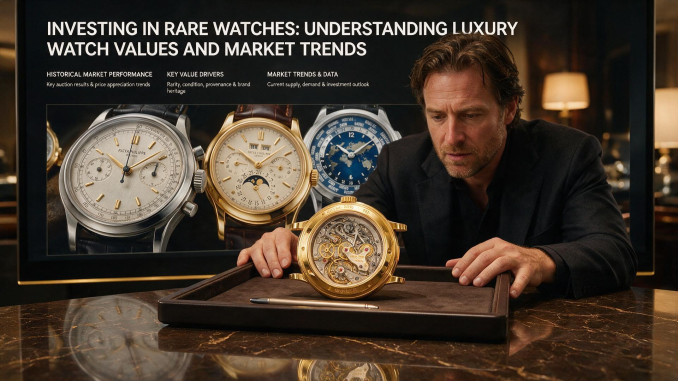
Thirty years ago, a wristwatch was something you wore. It told the time, it signaled taste, and if it was a good one, it lasted a lifetime. The idea that a watch could be an investment would have struck most people as odd. That has changed dramatically. Rare watches now trade at auction for millions of dollars, specialist indices track their performance, and wealthy families allocate capital to them alongside art, classic cars, and other collectibles. The transformation is one of the more remarkable stories in the alternative asset world, and understanding how it happened is the first step toward understanding whether watches belong in a family’s portfolio.
The shift began in the 1980s, when a small group of collectors started paying attention to vintage pieces that had been overlooked. Those collectors recognized that certain references were produced in tiny numbers, that original condition mattered enormously, and that the history behind a watch could add significant value. As the collector base grew, prices rose, and the market became more organized. Auction houses began to hold dedicated watch sales, specialist dealers emerged, and the internet made it possible for collectors around the world to compare notes and to compete for the same pieces.
The second phase came in the 2000s and 2010s, when the market broadened beyond vintage to include modern limited editions and certain current production models. Brands like Rolex, Patek Philippe, and Audemars Piguet became cultural status symbols, and demand from newly wealthy buyers in Asia and the Middle East pushed prices to new highs. That demand created a secondary market that was far larger and more liquid than anything that had existed before, and it attracted financial investors who saw watches as a store of value that was uncorrelated with public markets.
The third phase, which is still unfolding, has been marked by professionalization and volatility. The market has become more transparent, with published auction results and specialist indices that allow investors to track performance. But it has also become more cyclical, with prices for some models falling sharply from their peaks as supply increased and as the global economy shifted. That volatility is a reminder that watches are not a guaranteed store of value, and that the families who do well are the ones who understand the market’s dynamics rather than the ones who chase the latest trend. Luxury watch investment is a real asset class, but it is not a simple one.
The Factors That Determine a Watch’s Value
The value of a rare watch is determined by a combination of factors, and the family should understand each of them before making a purchase. The first factor is brand and reference. Certain brands, including Rolex, Patek Philippe, Audemars Piguet, Vacheron Constantin, and A. Lange & Söhne, have a long history, a strong collector base, and a track record of holding value. Within those brands, certain references are more desirable than others, because they were produced in smaller numbers, because they have a significant place in the brand’s history, or because they are associated with a famous owner or event.
The second factor is condition. A watch that is in original, unpolished condition is worth far more than one that has been refinished or restored. The dial is particularly important, because a dial that has been refinished or replaced can reduce the value by a substantial amount. The case, the hands, the bezel, and the bracelet also matter, and the family should understand what constitutes original condition for the specific reference. A watch that has been serviced by the manufacturer may be worth less than one that has not, because the service may have replaced original parts with modern ones. Rare watch investing requires a deep understanding of condition, because the difference between a top example and an average one can be enormous.
The third factor is rarity. A watch that was produced in a small number, or that is one of a kind, is more valuable than one that was mass-produced. Rarity can come from the production run, from a special edition, from a unique dial, or from a prototype. The family should understand the production numbers and the rarity of the reference before making a purchase, and it should be wary of any watch that is described as rare without evidence. The fourth factor is provenance. A watch that has a documented history, especially one that includes a famous owner or a significant event, is more valuable than one with a thin or unknown history. The family should research the provenance carefully, and it should be wary of any watch that lacks a clear chain of custody.
The fifth factor is completeness. A watch that comes with its original box, papers, and accessories is worth more than one that does not. The papers are particularly important, because they confirm the watch’s authenticity and its date of sale. A watch with a full set is more desirable to collectors, and it is more likely to hold its value over time. The family should understand the importance of completeness, and it should be prepared to pay a premium for a watch that has all of its original components.
Market Trends and the Watches That Have Outperformed
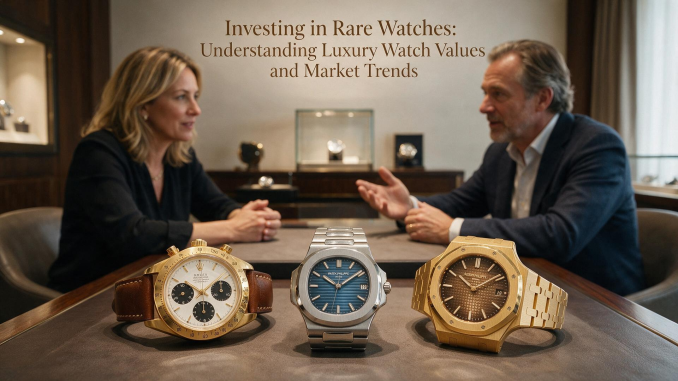
The watch market has produced some extraordinary returns over the past two decades, and certain references have become iconic in the process. The Rolex Daytona, particularly the vintage references and the modern steel models, has been one of the strongest performers. The Patek Philippe Nautilus and Aquanaut have also seen significant appreciation, driven by a combination of brand heritage, design, and limited supply. The Audemars Piguet Royal Oak has followed a similar trajectory, with vintage and modern examples both attracting strong demand.
The vintage market has its own dynamics. A vintage watch that is in original condition and that has a significant history can be worth many times its original price. A Paul Newman Daytona, for example, has sold for millions of dollars, because of its association with the actor and its rarity. A Patek Philippe perpetual calendar with a unique dial can also command a premium, because of its complexity and its rarity. The vintage market rewards expertise and patience, and it punishes buyers who do not do their homework.
The modern market has been more volatile. The steel sports models from Rolex, Patek Philippe, and Audemars Piguet saw dramatic price increases during the 2020s, driven by a combination of low interest rates, strong demand, and limited supply. That bubble has partially deflated, with prices for some models falling significantly from their peaks. The lesson is that modern watches can be subject to speculative cycles, and the family should be cautious about buying at the top of a cycle. Best investment watches are not necessarily the ones that are most popular at the moment. They are the ones that have a strong track record, a deep collector base, and a supply that is genuinely limited.
The family should also consider the trends that are shaping the market. The rise of online platforms has made it easier to buy and sell watches, which has increased liquidity but also increased competition. The growth of the Asian market has created new demand, particularly for certain brands and references. The increasing interest from financial investors has added capital to the market, but it has also added volatility. The family should understand those trends before making a purchase, because they affect both the value and the liquidity of the watch.
Buying, Selling, and the Costs of Ownership
The buying process is different from the selling process, and the family should understand both before committing capital. Buying at auction is the most transparent channel, because the results are published and the competition is visible. But the buyer’s premium adds to the cost, and the competition can be fierce. Buying from a dealer offers access and expertise, but the markup can be significant and the transparency is limited. Buying from a private seller offers discretion, but the due diligence burden falls entirely on the buyer. The family should choose the channel that fits its goals and its resources, and it should work with advisors who have experience in that channel.
The selling process is equally important, and it should be considered before the purchase. A family that plans to sell in a few years should consider the transaction costs, the market liquidity, and the tax consequences. A family that plans to hold for decades should consider the long-term trends in the market and the watch’s place in it. The exit strategy affects the return calculation, and it should be considered before the purchase. A watch that is easy to sell is more valuable than one that is difficult to sell, even if the purchase price is the same.
The costs of ownership are also significant. A rare watch needs insurance, a safe or a vault, and periodic servicing, and those costs can add up to a significant percentage of the watch’s value each year. The insurance should cover the full value of the watch, including the cost of restoration and the loss of market value if the watch is damaged. The servicing should be done by the manufacturer or by a qualified watchmaker, and it should be documented to preserve the watch’s provenance. The family should budget for those costs, and it should factor them into the investment analysis. Luxury watch valuation should account for the total cost of ownership, not just the purchase price.
The family should also consider the tax consequences. A watch that is sold at a gain may be subject to a higher tax rate than a stock or a bond, because collectibles are taxed at a maximum rate that is higher than the long-term capital gains rate. A watch that is held until death may receive a step-up in basis, which eliminates the capital gain for heirs, but it may also be subject to estate tax. The family should work with a tax advisor who understands the rules for collectibles, and it should plan for the tax consequences before making a purchase.
Common Mistakes and the Long View
The most common mistake is buying on emotion. A family that falls in love with a watch may overlook its flaws, overpay for it, and fail to consider its resale potential. The result can be a collection that is a source of pleasure but not a source of wealth. The family should approach the purchase with discipline, and it should be prepared to walk away if the watch does not meet its criteria.
Another common mistake is failing to do the due diligence. A family that buys a watch without verifying its authenticity, its condition, and its provenance may find that it has bought a liability rather than an asset. The cost of due diligence is small relative to the value of the watch, and the consequences of skipping it can be severe.
A third mistake is chasing trends. A family that buys whatever is popular at the moment may find that the watch loses value when the trend changes. The family should focus on watches that have a strong track record, a deep collector base, and a supply that is genuinely limited, rather than on watches that are simply fashionable. Collectible watch market trends can change quickly, and the families that do well are the ones that focus on fundamentals rather than on hype.
Ultimately, rare watches can be a valuable part of a diversified wealth plan, but they require passion, expertise, and discipline. The families that do well are the ones that collect what they love, that understand the market, that do their due diligence, and that plan for the long term. Those families tend to find that the collection is both a source of joy and a source of wealth, and that the two are not in conflict. The families that treat watches as a quick investment often find that the costs outweigh the benefits. The difference is in the approach, and the approach is what makes the collection valuable.