Why Rare Coins Deserve a Serious Look From Patient Investors
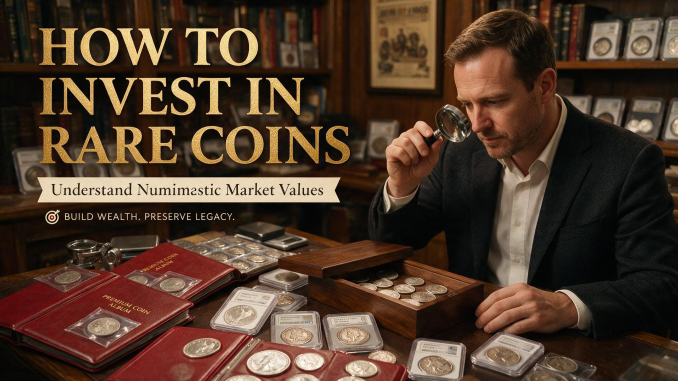
Rare coins are one of the oldest collectible asset classes in the world, and they are also one of the most misunderstood. To many people, coin collecting is a childhood hobby, something you do with the pennies you find in your pocket. To a serious collector or investor, rare coins are a market with a deep history, an established grading system, a global buyer pool, and a track record of long-term appreciation. The market is smaller and less visible than the markets for art, watches, or classic cars, but that obscurity is part of what makes it interesting. Serious collectors have been able to acquire significant value in a market that is not yet dominated by institutional capital or by the same level of speculation that has affected other collectibles categories.
The financial case for rare coins rests on scarcity, condition, and demand. A coin that was minted in a small quantity, that survived in excellent condition, and that is in demand from collectors is likely to hold its value and to appreciate over time. The supply of rare coins is fixed, because no more can be minted, and the supply of high-grade examples is particularly limited, because most coins that were minted have been lost, damaged, or melted down over the years. As the pool of collectors grows and as wealth increases, demand for the rarest examples can exceed the supply, which supports prices.
The market is also more mature than many investors realize. Rare coins are graded by independent services that assign a standardized grade to each coin, which makes it possible to compare coins across dealers and auctions. The grading system has its own vocabulary, its own standards, and its own controversies, but it provides a level of transparency that is rare in the collectibles world. Auction houses hold regular coin sales, specialist dealers operate with the same rigor as any other investment intermediary, and online platforms have made it easier for collectors to buy and sell.
But the market has its own challenges, and the family should understand them before committing capital. Rare coins are illiquid, and the market for any single coin can be thin. The transaction costs are significant, often ten to twenty percent between buyer’s premium and seller’s commission. The costs of ownership, including insurance, storage, and grading, can be substantial. And the value of a coin depends heavily on its grade, its rarity, and its provenance, all of which require specialized expertise to evaluate. A family that treats rare coins as a simple store of value may find that the costs and the risks outweigh the returns. Rare coin investment works best when the family is patient, informed, and realistic about the market.
Understanding Grading and the Factors That Drive Value
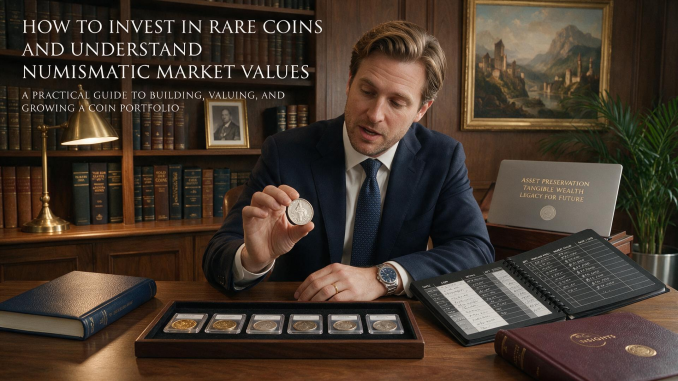
The value of a rare coin is determined by a combination of factors, and the most important of these is grade. Coins are graded on a scale from one to seventy, with one being a barely identifiable coin and seventy being a flawless example. The grading scale is used by independent services, including the Professional Coin Grading Service (PCGS) and the Numismatic Guaranty Company (NGC), and their grades are widely accepted in the market. The difference between one grade and the next can be significant, especially at the high end of the scale, where a single point can mean a difference of thousands or even millions of dollars.
Grade matters because it reflects the coin’s condition, and condition is one of the most important drivers of value. A coin that is in mint state, meaning it has never circulated and retains its original surface, is worth far more than one that has been circulated and shows wear. A coin that is in a high grade, such as MS-65 or higher, is worth more than one in a lower grade, because high-grade examples are rarer and more desirable. The family should understand the grading scale before making a purchase, and it should work with a dealer or advisor who can evaluate the coin’s grade accurately.
Rarity is the second factor. A coin that was minted in a small quantity, or that is one of a small number of surviving examples, is more valuable than one that was minted in large quantities. The term key date refers to a coin that is rare because of its low mintage, and those coins are often the most valuable in a series. The family should understand the mintage figures and the survival rates for the coins it is considering, because those figures are the foundation of the coin’s value.
Provenance is the third factor. A coin that has a documented history, especially one that includes a famous collection or a significant auction, is more valuable than one with a thin or unknown history. The provenance should be supported by documentation, including the original packaging, the auction catalog, and any certificates. A coin with a strong provenance is more desirable to collectors, and it is more likely to hold its value over time. Numismatic investment depends heavily on provenance, because the history is what makes a coin unique.
The Categories and the Coins That Have Outperformed
The rare coin market is not a single market. It is a collection of segments, each with its own buyer pool, its own price drivers, and its own risks. The most established segment is U.S. coins, which have a deep collector base, a well-documented history, and a strong track record of appreciation. Coins such as the 1907 Saint-Gaudens double eagle, the 1916-D Mercury dime, and the 1893-S Morgan dollar are iconic examples, and their values have appreciated significantly over the past several decades.
World coins are another important segment, and they have a different appeal. Coins from ancient Greece and Rome, from medieval Europe, and from the British Empire have a strong collector base, and they offer access to historical periods that are not represented in the U.S. market. The market for world coins is smaller and more specialized, and it requires a different type of expertise. But the returns can be strong, and the family should consider whether the segment fits its interests.
Ancient coins are a third segment, and they appeal to collectors who are interested in history and archaeology. Coins from the Greek and Roman empires are the most common, and they offer a tangible connection to the ancient world. The market for ancient coins is smaller and more specialized, and it requires a deep understanding of history and archaeology. The family should work with a specialist dealer or auction house that has expertise in the segment before making a purchase.
Modern coins are a fourth segment, and they include coins from the twentieth and twenty-first centuries that have become desirable because of their rarity or their design. Coins such as the 1943 copper penny, the 1955 doubled die cent, and the 1964 Kennedy half dollar have a strong collector base, and their values have appreciated over time. The market for modern coins is younger and more dynamic, and it can be more volatile than the market for older coins. Valuable collectible coins are not limited to the rarest or oldest examples. Some modern coins have become valuable because of their rarity or their historical significance.
Buying, Selling, and the Role of Grading Services
The buying process is different from the selling process, and the family should understand both before committing capital. Buying at auction is the most transparent channel, because the results are published and the competition is visible. But the buyer’s premium adds to the cost, and the competition can be fierce. Buying from a dealer offers access and expertise, but the markup can be significant and the transparency is limited. Buying from a private seller offers discretion, but the due diligence burden falls entirely on the buyer. The family should choose the channel that fits its goals and its resources, and it should work with advisors who have experience in that channel.
Grading services play a central role in the market, and the family should understand their function. A grading service examines a coin, assigns a grade, and encapsulates the coin in a sealed holder that displays the grade and the service’s certification. The sealed holder is a form of authentication and a form of protection, because it prevents the coin from being handled or tampered with. A coin that has been graded by a recognized service is more liquid and more valuable than one that has not, because the grade is a form of assurance for buyers.
But grading is not infallible, and the family should understand its limitations. The grading services are generally reliable, but they can make mistakes, and the grading standards can change over time. A coin that was graded as MS-65 ten years ago might be graded as MS-64 today, which would reduce its value. The family should review the coin’s certification carefully and should consider whether the grade is consistent with the coin’s appearance. It should also consider whether the coin is a candidate for regrading, which can sometimes increase its value if the service assigns a higher grade.
The selling process is equally important, and it should be considered before the purchase. A family that plans to sell in a few years should consider the transaction costs, the market liquidity, and the tax consequences. A family that plans to hold for decades should consider the long-term trends in the market and the coin’s place in it. The exit strategy affects the return calculation, and it should be considered before the purchase. A coin that is easy to sell is more valuable than one that is difficult to sell, even if the purchase price is the same. Coin appraisal services should be used to establish the coin’s value before a sale, because an accurate appraisal is essential for a successful transaction.
Costs, Storage, and the Practicalities of Ownership
Rare coins are not passive assets. They require insurance, storage, and grading, and the costs can be significant. A coin that is stored in a safe or a safe deposit box needs insurance that covers its full value, and the cost of that insurance can be significant, especially for a large collection. A coin that is not graded may need to be graded before it can be sold, and the cost of grading can be substantial. The family should budget for those costs, and it should factor them into the investment analysis.
The storage requirements are also important. Coins should be stored in a cool, dry place, away from light and humidity, and they should be protected from handling. A safe deposit box or a home safe is the most common storage solution, and the family should ensure that the storage is secure and that the coins are insured. A coin that is stored improperly may develop toning, corrosion, or other problems that reduce its value, and the cost of correcting those problems can be substantial.
The family should also consider the tax consequences. A coin that is sold at a gain may be subject to a higher tax rate than a stock or a bond, because collectibles are taxed at a maximum rate that is higher than the long-term capital gains rate. A coin that is held until death may receive a step-up in basis, which eliminates the capital gain for heirs, but it may also be subject to estate tax. The family should work with a tax advisor who understands the rules for collectibles, and it should plan for the tax consequences before making a purchase. Rare coin market analysis should include the tax implications, because they affect the net return.
Common Mistakes and the Long View
The most common mistake is buying on emotion. A family that falls in love with a coin may overlook its flaws, overpay for it, and fail to consider its resale potential. The result can be a collection that is a source of pleasure but not a source of wealth. The family should approach the purchase with discipline, and it should be prepared to walk away if the coin does not meet its criteria.
Another common mistake is failing to do the due diligence. A family that buys a coin without verifying its authenticity, its grade, and its provenance may find that it has bought a liability rather than an asset. The cost of due diligence is small relative to the value of the coin, and the consequences of skipping it can be severe. The family should work with a reputable dealer or grading service, and it should review the documentation carefully before making a purchase.
A third mistake is overpaying for common coins. Some dealers market common coins as rare or valuable, and inexperienced buyers may be fooled by the marketing. The family should research the market before making a purchase, and it should compare the coin’s price to the prices of comparable coins in the same grade. A coin that is priced significantly above the market may be a poor investment, regardless of its quality.
Ultimately, rare coins can be a valuable part of a diversified wealth plan, but they require passion, expertise, and discipline. The families that do well are the ones that collect what they love, that understand the market, that do their due diligence, and that plan for the long term. Those families tend to find that the collection is both a source of joy and a source of wealth, and that the two are not in conflict. The families that treat coins as a quick investment often find that the costs outweigh the benefits. The difference is in the approach, and the approach is what makes the collection valuable.