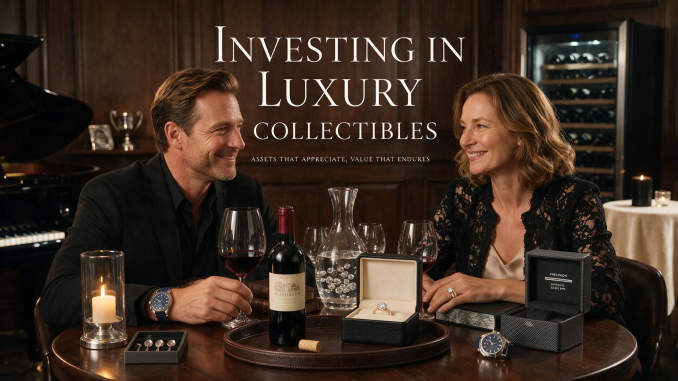
Why Luxury Collectibles Belong in a Serious Conversation About Wealth
Luxury collectibles occupy a strange position in the world of wealth. They are not financial assets in any conventional sense. They produce no income, they have no earnings, and they cannot be valued with a discounted cash flow model. Yet the market for them is enormous, global, and increasingly professionalized, and wealthy families have been allocating capital to fine wine, jewelry, watches, and rare objects for generations. The appeal is partly emotional and partly financial, and the families who succeed with collectibles are the ones who are honest about which motivation is driving them.
The financial case rests on scarcity and demand. A case of first-growth Bordeaux from a great vintage, a signed Art Deco bracelet, or a Patek Philippe reference produced in a handful of examples cannot be replicated. As wealth grows globally and as the pool of collectors expands, the demand for those objects can increase faster than the supply, which supports prices over time. That dynamic has produced impressive returns in some categories, and it has attracted institutional capital, which has further professionalized the market. Auction houses now publish detailed market reports, indices track category performance, and specialist dealers operate with the same rigor as any other investment intermediary.
But the financial case has limits, and the family should understand them before committing capital. Collectibles are highly illiquid, and the market for any single object can be thin. The transaction costs are significant, often twenty percent or more between buyer’s premium and seller’s commission. The costs of ownership, including insurance, storage, and maintenance, can be substantial. And the value of a collectible depends heavily on condition, provenance, and authenticity, all of which require specialized expertise to evaluate. A family that treats collectibles as a simple store of value may find that the costs and the risks outweigh the returns.
The emotional case is equally important. Collectibles provide enjoyment, social connection, and a sense of participation in a community of like-minded enthusiasts. That enjoyment is real, and it should be part of the calculation. A family that loves wine will derive more satisfaction from owning a cellar than from holding a bond with a similar return. The key is to be clear about the balance between passion and portfolio, and to size the allocation accordingly. Luxury collectibles investment works best when the family is honest about which benefits it is seeking, because the strategies that maximize financial return are not always the ones that maximize enjoyment.
Fine Wine: The Most Established Collectible Market
Fine wine is the most established of the luxury collectibles, and it has a longer track record of financial performance than most other categories. The market is driven by scarcity, vintage quality, and provenance. A case of Château Lafite Rothschild from 1982, a bottle of Romanée-Conti, or a vertical of Château Latour can command prices that are many times their original release price, and the demand comes from collectors around the world. The market has become increasingly professionalized, with specialist auction houses, dedicated funds, and online platforms that allow collectors to buy and sell with greater transparency.
The appeal of wine is that it is a consumable, which means the supply declines over time as bottles are drunk. That scarcity supports prices, especially for the rarest and most sought-after wines. But the consumable nature also creates a challenge, because the wine must be stored properly to maintain its value. A bottle that has been exposed to heat, light, or vibration may be spoiled, and the cost of proper storage can be significant. The family should understand the storage requirements before investing, because a wine collection that is not properly stored may be worth far less than expected.
The market for wine is also subject to fashion and to the state of the global economy. When wealthy collectors are feeling confident, prices for the top wines tend to rise. When the economy slows, prices can fall, especially for the wines that are not at the very top of the market. The family should be prepared for volatility, and it should not assume that wine prices will rise indefinitely. Rare wine investment is a long-term game, and the families that do well are the ones that buy carefully, store properly, and hold for decades.
The costs of owning wine are also significant. A proper cellar requires climate control, security, and insurance, and the cost of those services can add up to a significant percentage of the collection’s value each year. The family should budget for those costs and should factor them into the investment analysis. A wine collection that looks affordable on paper may be a financial drain in practice, especially if the family does not have the resources to maintain it properly.
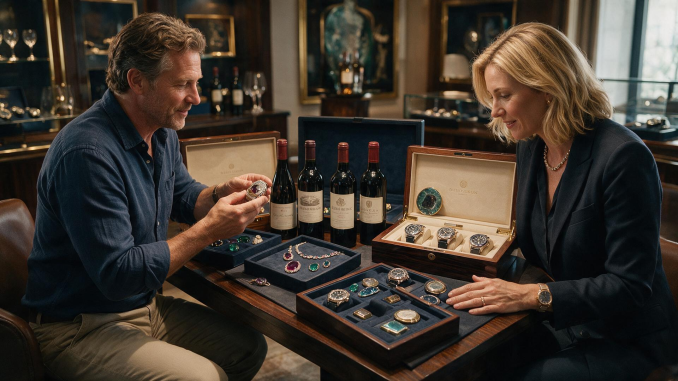
Fine Jewelry: Beauty, Rarity, and the Importance of Provenance
Fine jewelry is another major collectible category, and it has a different set of dynamics. The market is driven by the quality of the stones, the craftsmanship of the setting, the reputation of the maker, and the provenance of the piece. A signed piece from a major house such as Cartier, Van Cleef & Arpels, or Bulgari can command a premium, especially if it is from a significant period or has a notable history. The market has become increasingly global, with buyers from Asia, the Middle East, and the West competing for the rarest pieces.
The appeal of jewelry is that it is wearable, which means it can be enjoyed in a way that a painting or a watch cannot. A piece of fine jewelry can be worn to a social event, passed down through generations, or displayed as a work of art. That dual nature makes it attractive to families who want an asset that is both beautiful and valuable. But the wearable nature also creates risk, because jewelry can be damaged, lost, or stolen, and the cost of insurance and security can be significant.
The value of fine jewelry depends heavily on the quality of the stones and the craftsmanship of the setting. A diamond with a high color and clarity grade, a ruby with a rich hue, or an emerald with a vivid green color will be worth far more than a stone of lower quality. The family should work with a specialist who can evaluate the stones and the setting, and it should be wary of any piece that lacks a clear provenance or certification. Fine jewelry investment requires a deep understanding of gemology and craftsmanship, and the family should work with experts who have that knowledge.
The market for jewelry is also subject to changes in fashion and in the global economy. Certain styles and periods go in and out of favor, and the value of a piece can change as a result. The family should focus on pieces that are timeless and that have a strong provenance, because those are the pieces that are most likely to hold their value over time. A piece that is fashionable today may be out of favor tomorrow, while a classic piece from a major house is more likely to endure.
Luxury Watches: Engineering, Heritage, and the Power of Brand
Luxury watches are one of the most established collectible categories, and they have a track record of strong appreciation for certain references. The market is driven by brand heritage, rarity, condition, and provenance. A Patek Philippe Nautilus, a Rolex Daytona, or an Audemars Piguet Royal Oak can command prices that are many times their original retail price, and the demand comes from collectors around the world. The market has become increasingly professionalized, with specialist auction houses, dedicated indices, and online platforms that allow collectors to buy and sell with greater transparency.
The appeal of watches is that they are functional objects that can be worn and enjoyed, and they are also engineering marvels that represent the pinnacle of craftsmanship. A fine watch is a small mechanical masterpiece, and the best examples are works of art in their own right. That combination of function and beauty makes watches attractive to collectors who want an asset that is both useful and valuable. Luxury watch collectibles are not just about telling time. They are about owning a piece of history and craftsmanship.
The value of a watch depends heavily on its condition, its originality, and its completeness. A watch that is in original, unpolished condition is worth far more than one that has been refinished or restored, and a watch that comes with its original box and papers is worth more than one that does not. The family should work with a specialist who can evaluate the watch’s condition and authenticity, and it should be wary of any watch that lacks a clear provenance. The market for watches is also subject to cycles, and the family should be prepared for volatility, especially in the modern segment.
The costs of owning watches are also significant. A fine watch requires insurance, secure storage, and periodic servicing, and the cost of those services can add up over time. The family should budget for those costs and should factor them into the investment analysis. A watch collection that looks affordable on paper may be a financial drain in practice, especially if the family does not have the resources to maintain it properly.
Rare Assets and the Broader Collectibles Market
Beyond wine, jewelry, and watches, there is a broad range of rare assets that can be part of a collectibles portfolio. Classic cars, rare books, coins, stamps, sports memorabilia, and musical instruments all have established markets and dedicated collector bases. Each category has its own dynamics, its own price drivers, and its own risks, and the family should understand the specific market before committing capital.
The common thread among all collectibles is that they require expertise, patience, and discipline. A family that buys on emotion may overpay, overlook flaws, and fail to consider the resale potential. A family that buys with a clear strategy, a strong network, and a long time horizon is more likely to succeed. The family should work with advisors who have deep expertise in the specific category, and it should be prepared to do the due diligence that the market requires.
The family should also consider the role of collectibles in its broader portfolio. Collectibles are illiquid and expensive to own, and they should be sized appropriately. A family that puts too much of its wealth into collectibles may find that it is overexposed to a single asset class, and that the collection is difficult to sell when the family needs liquidity. A family that puts too little into collectibles may miss the diversification benefits that they can provide. High value collectible assets should be part of a diversified portfolio, not a substitute for one.
Common Mistakes and the Long View
The most common mistake is buying on emotion. A family that falls in love with an object may overlook its flaws, overpay for it, and fail to consider its resale potential. The result can be a collection that is a source of pleasure but not a source of wealth. The family should approach the purchase with discipline, and it should be prepared to walk away if the object does not meet its criteria.
Another common mistake is failing to do the due diligence. A family that buys a collectible without verifying its authenticity, its condition, and its provenance may find that it has bought a liability rather than an asset. The cost of due diligence is small relative to the value of the object, and the consequences of skipping it can be severe.
A third mistake is underestimating the costs. Collectibles require insurance, storage, maintenance, and recordkeeping, and those costs can be significant. The family should budget for those costs, and it should factor them into the investment analysis. A collection that looks affordable on paper may be a financial drain in practice, especially if the family does not have the resources to maintain it properly.
Ultimately, luxury collectibles can be a valuable part of a diversified wealth plan, but they require passion, expertise, and discipline. The families that do well are the ones that collect what they love, that understand the market, that do their due diligence, and that plan for the long term. Those families tend to find that the collection is both a source of joy and a source of wealth, and that the two are not in conflict. The families that treat collectibles as a quick investment often find that the costs outweigh the benefits. The difference is in the approach, and the approach is what makes the collection valuable.