
Why Venture Capital Rewards a Different Kind of Discipline
Venture capital has a reputation for being glamorous, and the stories that drive that reputation are real. A small check written into a startup that later becomes a household name can return many times the original investment, and those stories are what draw high-net-worth individuals toward the asset class. But the stories are also misleading, because they focus on the winners and ignore the much larger number of companies that failed. Venture capital is a power-law business, and the returns are concentrated in a very small number of investments. Understanding that reality is the starting point for any serious venture capital investment strategies discussion.
The power-law dynamic shapes everything about the asset class. In a typical venture portfolio, most companies return little or nothing, a handful return a moderate amount, and one or two return many times the original investment. That means the fund’s overall return depends heavily on a small number of outcomes, and the difference between catching a winner and missing one is enormous. It also means that a strategy built on avoiding losers is not enough. The investor has to be in enough deals to have a realistic chance of catching the winners, and that requires a portfolio approach rather than a concentrated bet on a single company.
For high-net-worth individuals, the challenge is that venture capital is difficult to access and difficult to evaluate. The best funds are oversubscribed and selective, and they often require a minimum commitment that is out of reach for all but the largest families. The best deals are often sourced through networks that individual investors do not have access to, and the best founders often choose their investors based on relationships rather than capital alone. That means high net worth venture capital is not simply a matter of writing checks. It is a matter of building access, developing expertise, and committing to a long-term approach.
The time horizon is another important factor. Venture capital investments typically take seven to ten years or more to mature, and the returns are realized through exits that may be years in the future. That means the investor needs to be comfortable with illiquidity and with uncertainty, and should not commit capital that may be needed in the near term. A family that is planning a major liquidity event in the next few years should not be allocating to venture capital, even if the opportunity looks compelling. The asset class is best suited for families with a long time horizon and a stable financial position.
The Main Routes Into Venture Capital and What Each One Requires
There are several ways for a high-net-worth individual to participate in venture capital, and each has its own advantages and limitations. The most traditional route is to invest in a venture capital fund, which pools capital from multiple investors and uses it to make a portfolio of investments. Venture capital funds provide diversification, professional management, and access to deals that an individual investor might not be able to source on their own. The trade-offs include high fees, long lock-up periods, and a lack of control over which companies are selected. The best funds are also difficult to access, which means the individual investor may be limited to funds that are less selective or that are raising capital for the first time.
A second route is angel investing, which involves making direct investments in early-stage companies. Angel investing can be rewarding, because it allows the investor to work closely with founders and to have a direct impact on the companies they back. It also offers the potential for higher returns, because angel investors often get in at lower valuations than venture funds. The trade-offs include higher risk, because angel investments are often in companies that are pre-revenue or pre-product, and a greater time commitment, because angel investors are often expected to provide guidance and introductions. Angel investing opportunities are best suited for investors who have the time, the expertise, and the network to evaluate individual companies and support them as they grow.
A third route is through a fund-of-funds or a platform that aggregates capital from multiple investors and allocates it across a portfolio of venture funds. These structures provide diversification and access that an individual investor might not be able to achieve on their own, but they come with additional fees and a lack of control over which funds are selected. They can be a good option for families that want exposure to the asset class but do not have the resources or the network to source individual investments.
A fourth route is through corporate venture capital or strategic partnerships, where a company invests in startups that are relevant to its business. That route is less common for individual investors, but it can be relevant for families that own operating businesses and want to invest in companies that are adjacent to their core operations. The advantage is that the family can bring strategic value to the startup, which can improve the company’s chances of success and the family’s returns. The trade-off is that the investment is tied to the family’s business interests, which may limit the range of opportunities available.
Evaluating Founders, Markets, and the Deals Themselves
Venture capital due diligence is different from private equity due diligence, because the companies being evaluated are typically earlier stage and have less financial history. That means the investor has to rely more on qualitative factors, including the quality of the founding team, the size of the market, and the potential for the company’s product to achieve product-market fit. The founding team is often the most important factor, because early-stage companies pivot frequently, and the team’s ability to adapt and execute is often more predictive of success than the initial business plan.
The market is the second most important factor. A company that is operating in a large, growing market has more room to expand than one that is operating in a small or mature market. The investor should look at the size of the addressable market, the pace of growth, and the competitive dynamics. It should also consider the regulatory environment, because changes in regulation can have a significant impact on a company’s prospects. A company that is operating in a market that is about to be disrupted by new technology or new regulation may be riskier than one that is operating in a stable market.
The product and the technology are also important. The investor should understand what the company is building, whether it solves a real problem, and whether it has a defensible advantage over competitors. It should look at the company’s intellectual property, its technology stack, and its ability to scale. A company with a strong product and a clear path to scale is a better bet than one with a me-too product and no clear differentiation. Startup investment strategies should be built around companies that have the potential to become category leaders, not companies that are simply incremental improvements on existing products.
The terms of the investment are also important. The investor should understand the valuation, the share class, the liquidation preference, and any protective provisions. It should also consider the company’s cap table, because a company with a complicated cap table or a large liquidation preference stack may leave common shareholders with little upside even if the company is successful. The investor should also consider the exit path, because a company that has no clear path to liquidity may leave the investor with shares that cannot be sold. A company that is targeting an acquisition or an IPO in the next few years is a better bet than one that has no clear exit strategy, and the investor should be realistic about the time horizon.
Portfolio Construction and the Discipline of Diversification
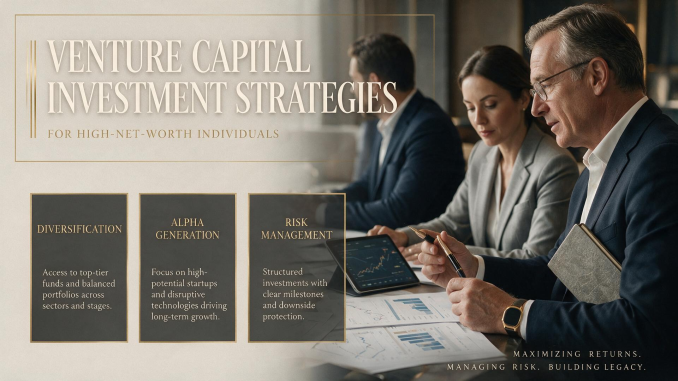
Because venture capital returns are driven by a small number of winners, diversification is essential. A portfolio of ten to fifteen companies is typically the minimum for a venture fund, and individual investors should aim for a similar level of diversification if they are making direct investments. That means writing a lot of small checks rather than a few large ones, and it means being prepared for the majority of those checks to return little or nothing. The goal is not to avoid losses, because losses are expected. The goal is to ensure that the portfolio has enough shots on goal to catch the winners.
Diversification across vintages is also important. Venture capital returns are cyclical, and a fund that invests at the top of a market cycle may struggle to generate strong returns. By committing capital across multiple vintages, the investor can smooth out the impact of market timing and reduce the risk that a single fund’s performance will determine the outcome. That approach requires patience and a long-term commitment, because the investor needs to be prepared to hold each vintage for the full term of the fund.
Diversification across stages and sectors is also worth considering. Early-stage investments offer the potential for higher returns but also higher risk, while later-stage investments offer more stability but lower potential returns. A portfolio that combines both can provide a better risk-adjusted return than one that focuses on a single stage. Similarly, a portfolio that spans multiple sectors can reduce the risk that a single industry downturn will drag down the entire portfolio. The right mix depends on the investor’s goals, risk tolerance, and time horizon, but the principle of diversification applies across all of them.
Liquidity planning is essential. Venture capital investments are illiquid, and the investor should be prepared to hold them for the full term of the fund. That means the investor should not commit capital that may be needed in the near term, and should maintain a reserve of liquid assets to cover unexpected needs. It should also consider the possibility that the company never goes public or is never acquired, which is a real risk for many venture-backed companies. A company that fails to achieve an exit may leave the investor with shares that cannot be sold, and the investor should be prepared for that possibility.
Common Mistakes and a Realistic Approach
The most common mistake in venture capital is chasing hot deals. Investors often hear about a company that is raising a round at a high valuation and assume that it must be a good investment, when in reality the valuation may reflect hype rather than fundamentals. A disciplined investor focuses on the quality of the company and the terms of the investment, not on the buzz surrounding it. That approach requires patience and a willingness to pass on deals that do not meet the investor’s criteria, even if they are popular.
Another common mistake is over-allocating to a single investment or a single fund. Venture capital is a high-risk asset class, and a loss on a single investment can be significant. By diversifying across multiple investments and multiple funds, the investor can reduce the impact of any single failure. The investor should also consider the overall allocation to venture capital within the broader portfolio, because the asset class should be a supplement to a diversified core, not a replacement for it.
A third mistake is underestimating the time and attention that venture capital requires. Direct investing, in particular, requires the investor to evaluate individual companies, negotiate terms, and support the companies as they grow. That can be a significant time commitment, and investors who are not prepared for it may find that their investments suffer. Fund investing requires less time, but it still requires the investor to evaluate the fund, monitor its performance, and decide whether to commit to future funds. The investor should be realistic about the resources required and should choose an approach that fits their capacity.
Ultimately, venture capital is a tool for investors who understand the power-law dynamic, who have a long time horizon, and who are comfortable with illiquidity and uncertainty. It can be a valuable part of a diversified portfolio, but it is not for everyone. The families that do well with it are the ones that approach it with discipline, diversify across investments and vintages, and work with advisors who have the experience to guide them. Those families are the ones that are able to capture the upside of the asset class while managing the downside, and that balance is what venture capital ultimately requires.